
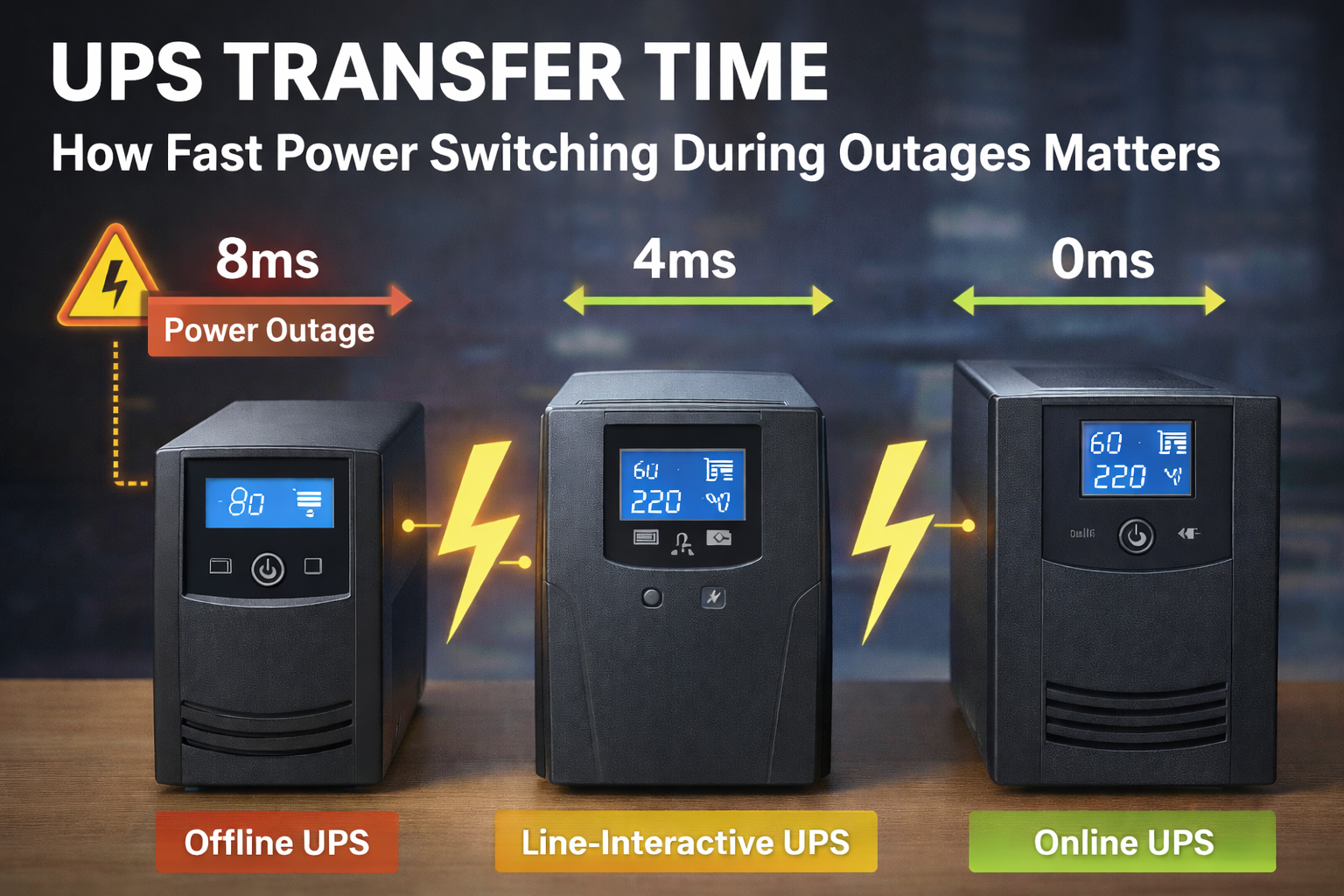
UPS transfer time plays a critical role in protecting electronic equipment during power disturbances. When a power outage or voltage fluctuation occurs, the UPS must switch from utility power to battery power quickly. If this transfer happens too slowly, sensitive devices may shut down, reset, or even suffer damage. Therefore, understanding switching time is essential when choosing the right backup power solution.
What Is UPS Transfer Time?
UPS transfer time refers to the brief interval between a utility power failure and the moment the UPS begins supplying power from its battery. Although this delay is usually measured in milliseconds, it still matters greatly. Even a short interruption can affect computers, servers, network devices, and industrial controllers.
In simple terms, the shorter the UPS transfer speed, the better the protection.
Why UPS response time Is Critical for Power Protection
First, modern electronic equipment has become increasingly sensitive to power interruptions. As a result, even a slight delay in power transfer can cause data loss or system crashes.
Second, faster UPS response time ensures uninterrupted operation. For example, in offices and homes, a quick response prevents computers and routers from rebooting. Meanwhile, in industrial or commercial environments, it helps maintain production processes and system stability.
Most importantly, a reliable UPS switching time protects long-term equipment health by reducing electrical stress during power events.
UPS Transfer Time and Different UPS Types
Not all UPS systems offer the same transfer time.
- Offline (Standby) UPS systems typically have a transfer time of 6–10 milliseconds. While this may be acceptable for basic devices, it may not suit critical applications.
- Line-interactive UPS units reduce switching time and provide better voltage regulation, making them a popular choice for homes and offices.
- Online (Double Conversion) UPS systems have near-zero backup switching speed because they continuously supply power through the inverter. Therefore, they offer the highest level of protection.
Choosing the right UPS type largely depends on how much switching time your equipment can tolerate.
How to Choose the Right UPS Based on Transfer Time
When selecting a UPS, you should always consider the sensitivity of your devices. For example, computers, servers, and networking equipment usually require fast power transfer delay. In contrast, simple appliances may tolerate longer delays.
Additionally, reviewing manufacturer specifications is essential. Many reputable brands clearly state backup switching speed in their technical data sheets. Consequently, comparing these values helps you make a more informed decision.
Final Thoughts
UPS transfer time is a key factor that directly affects power protection performance. While capacity and runtime are important, transfer speed should never be overlooked. By choosing a UPS with an appropriate power transfer delay, you ensure smoother operation, better equipment protection, and greater peace of mind during power disturbances.
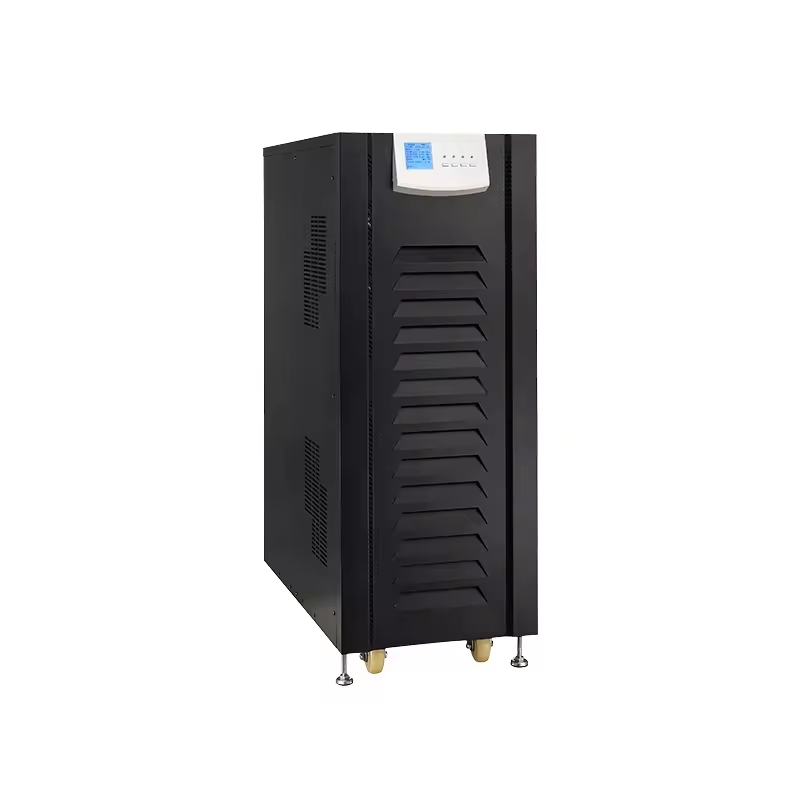
Greent’s online UPS can meet a zero response time for the loads, please check below line for more detail:
For more information on power quality standards, you can visit the International Electrotechnical Commission (IEC):
https://www.iec.ch
