
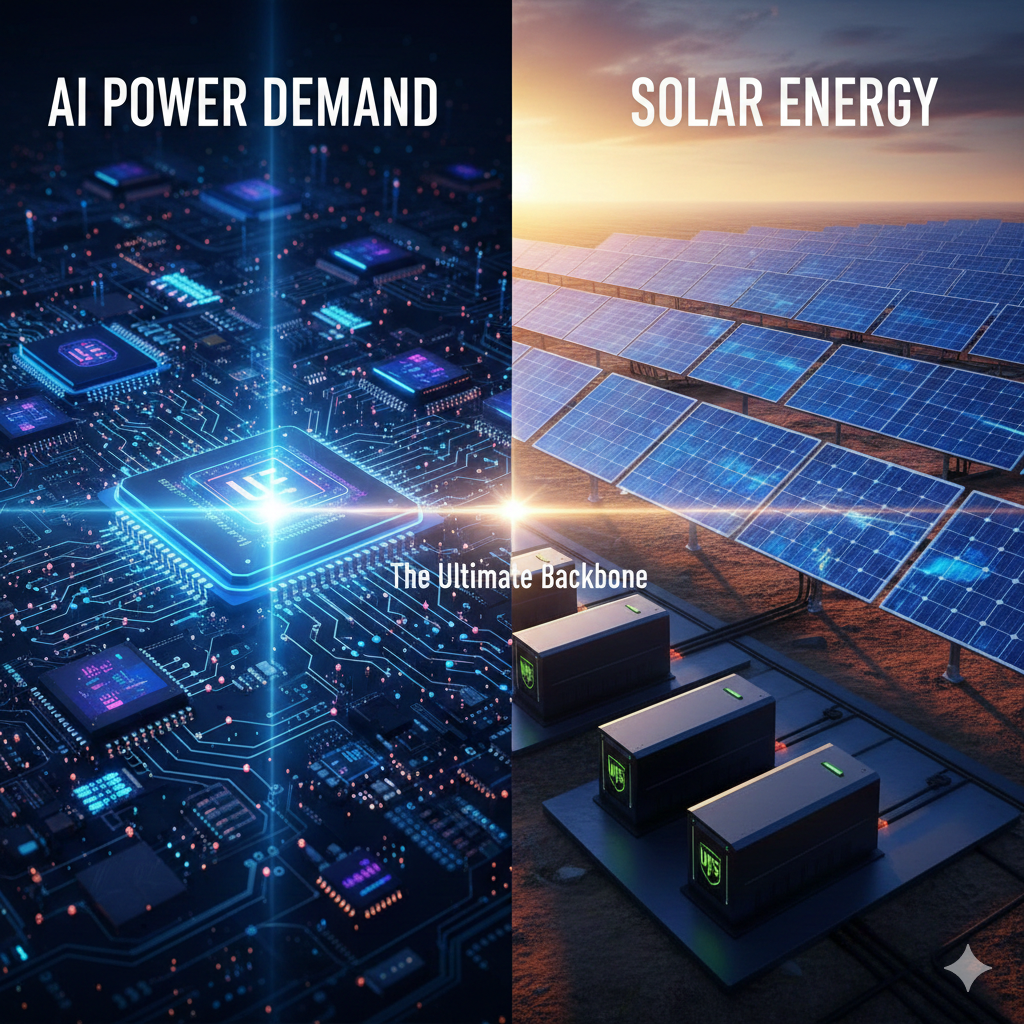
AI Power Demand: Why the End of AI is Solar Energy
AI power demand is currently the hottest topic in the tech industry. As we witness the explosive growth of AI-related semiconductor companies, the solar industry looks back at its own history. Many people wonder: how did we reach this pivotal moment?
The Rollercoaster Journey of Solar Energy
To begin with, let’s look back at 2018. The solar sector faced immense pressure due to policy shifts, leading to significant market anxiety. However, this pain eventually triggered a surge in volume as prices dropped. Consequently, by 2019, overseas markets began to flourish, and the industry slowly climbed out of its deepest trough.
Furthermore, in 2020, solar installations survived the global pandemic test. In addition, the introduction of “Carbon Neutrality” goals in late 2020 acted as a massive catalyst. As a result, by 2021, the industry reached a fever pitch. During that period, any company associated with solar energy saw its stock price soar. Nevertheless, the market eventually realized that even the most promising growth sectors cannot escape the laws of supply and demand.
Lessons from the Market Bubble
After the peak came a period of correction. The previous massive capacity expansion led to a supply glut. Similarly, secondary markets saw dramatic drops. Therefore, investors realized that the cyclical nature of the energy industry remains incredibly strong. While many were blinded by optimism, the reality of market cycles eventually set in.
In the same vein, we must analyze the current tech landscape. Although AI and chips are in a different development stage, market speculation shares common traits. Specifically, when a major theme emerges, capital tends to overdraw future growth potential.
Why AI Power Demand Leads Back to Energy
Ultimately, is there a limit to the AI boom? Actually, the bottleneck of AI is computing power, but the true bottleneck of computing power is energy. That is why many experts claim that “the end of AI is solar energy.”
Because AI power demand continues to scale, the need for sustainable energy and stable backup power becomes critical. In conclusion, whether it is through solar grids or high-efficiency UPS systems, securing the energy chain is the only way to sustain the AI revolution. Thus, the synergy between artificial intelligence and renewable energy is not just a trend; it is a necessity.
